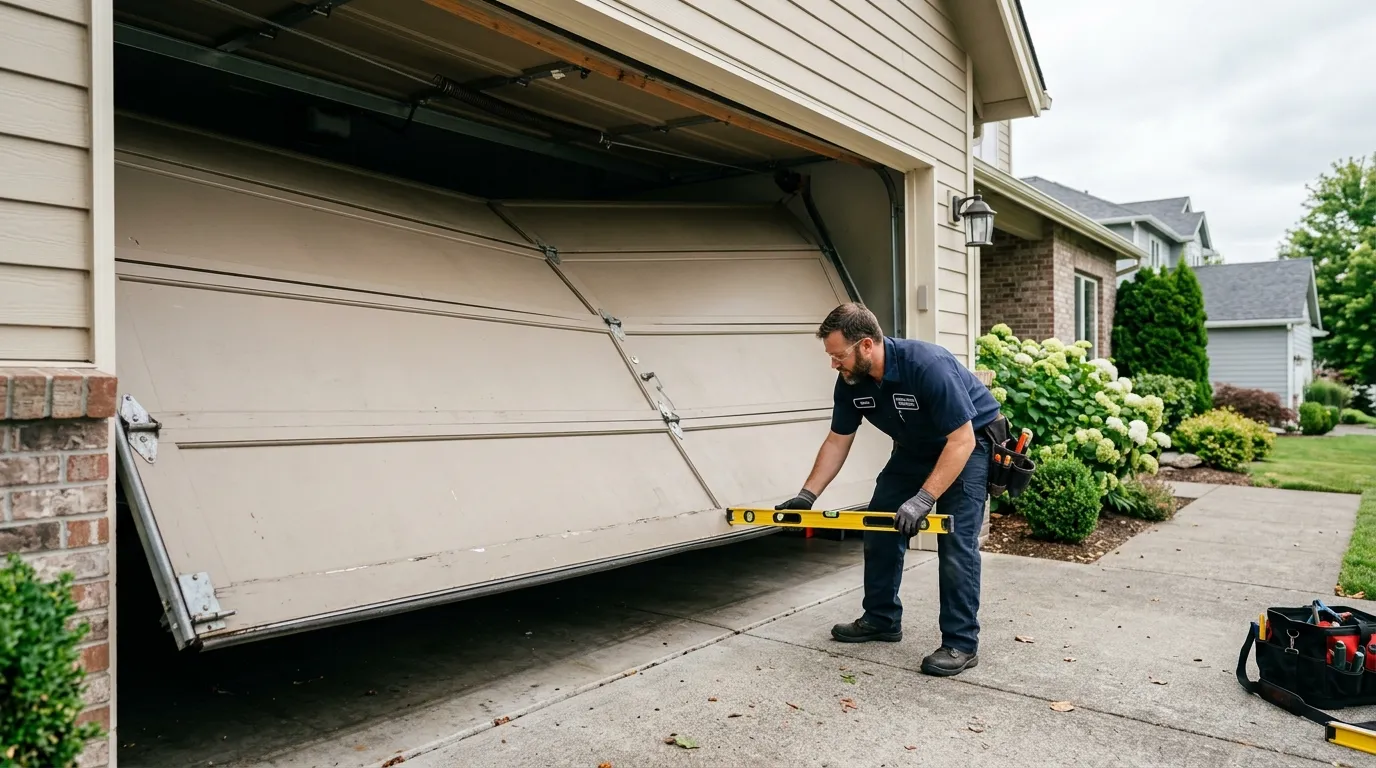
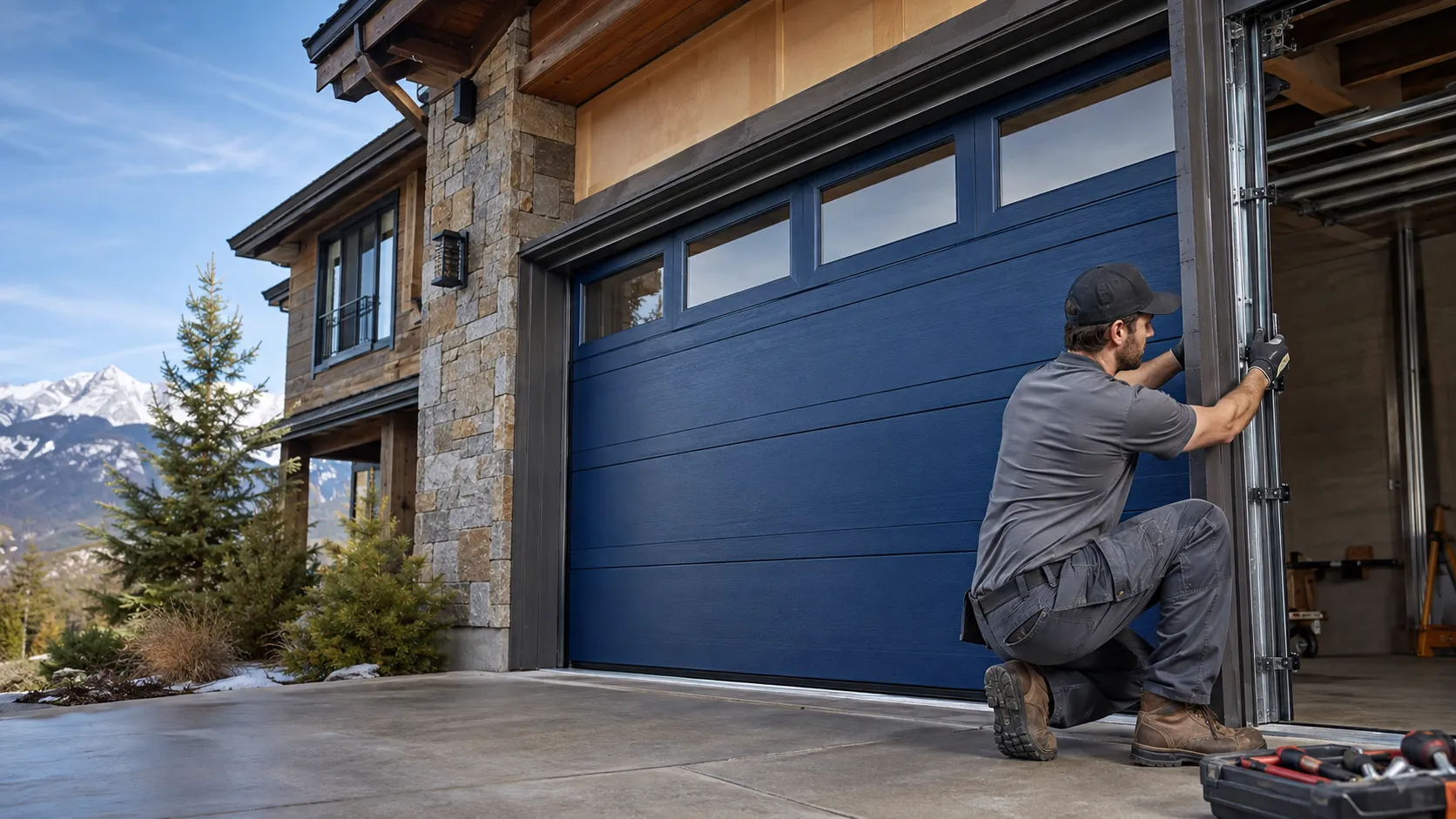
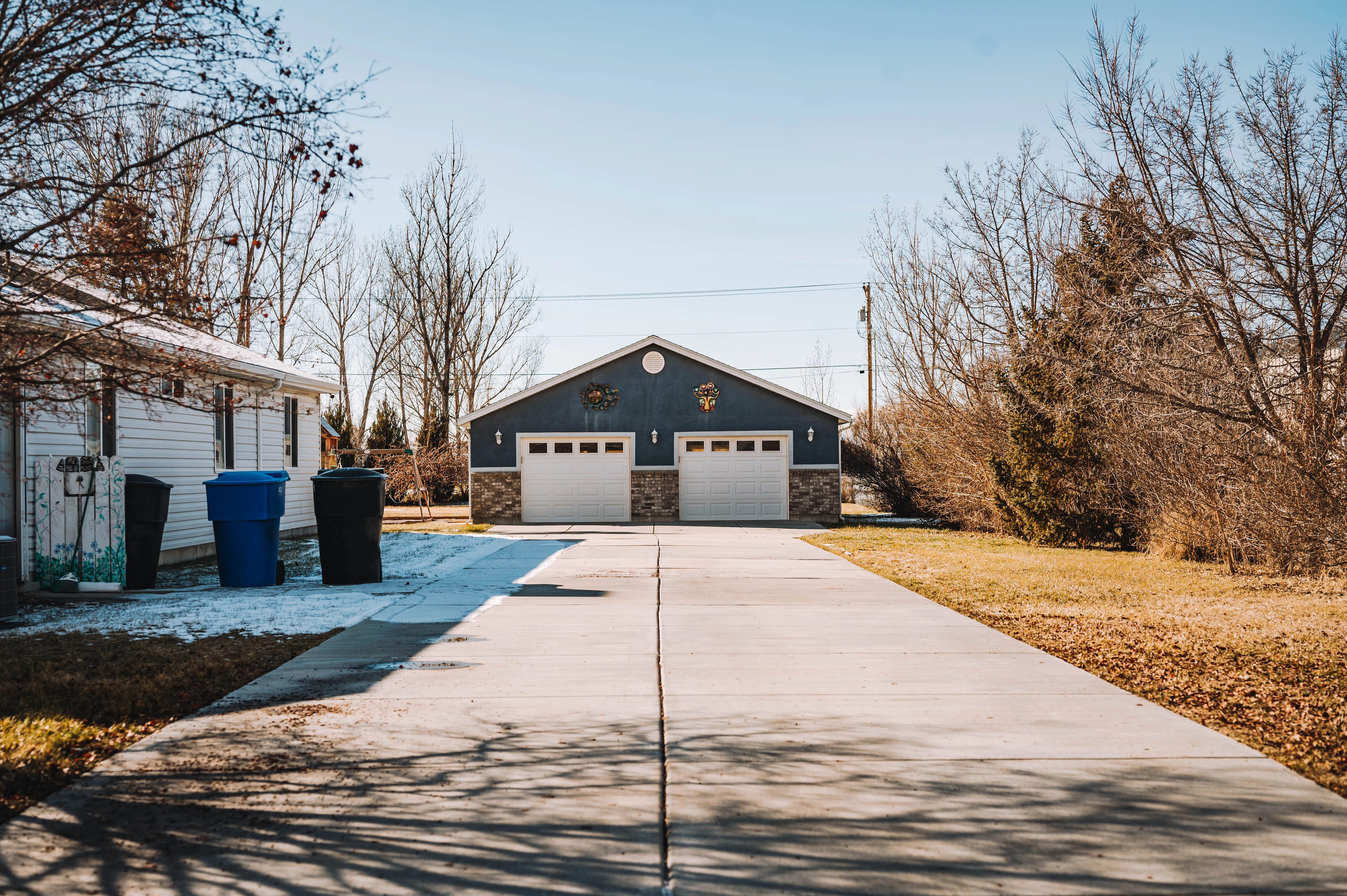
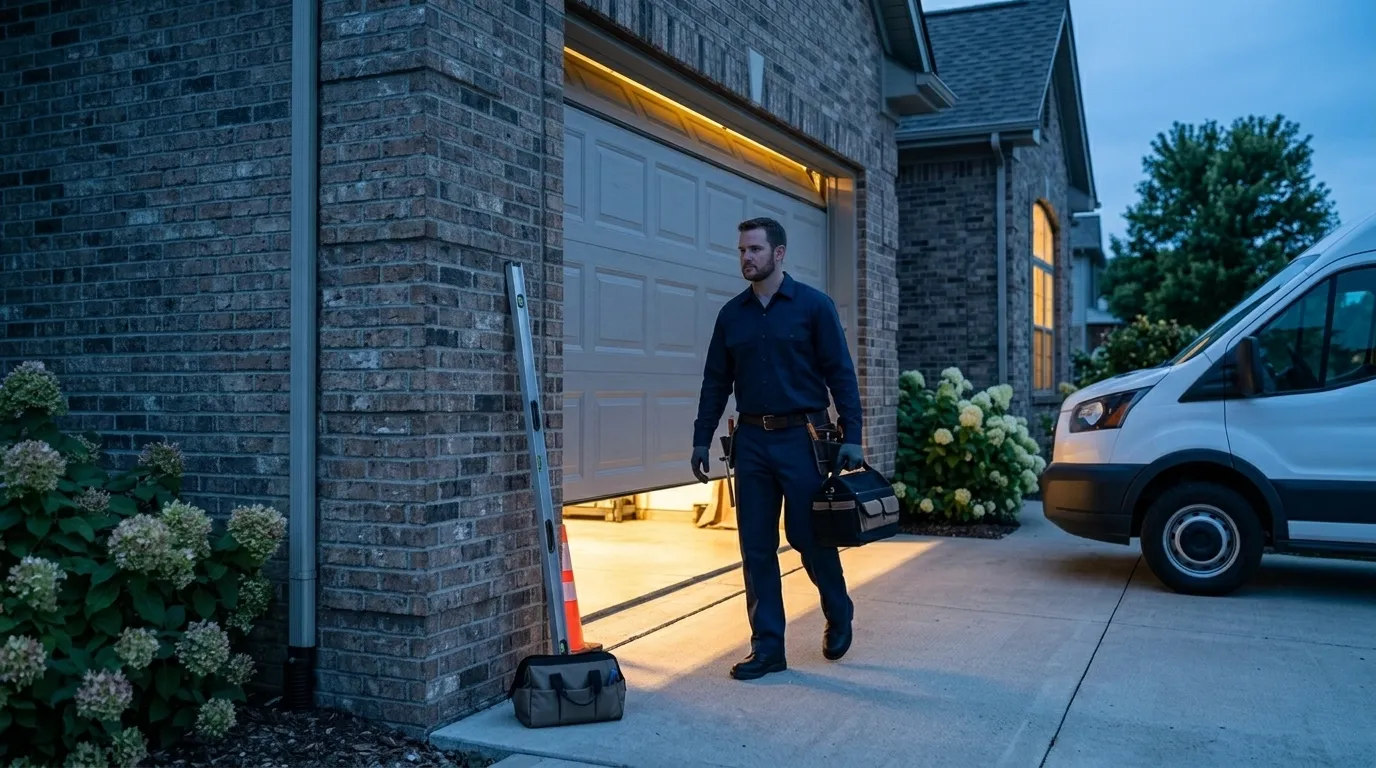
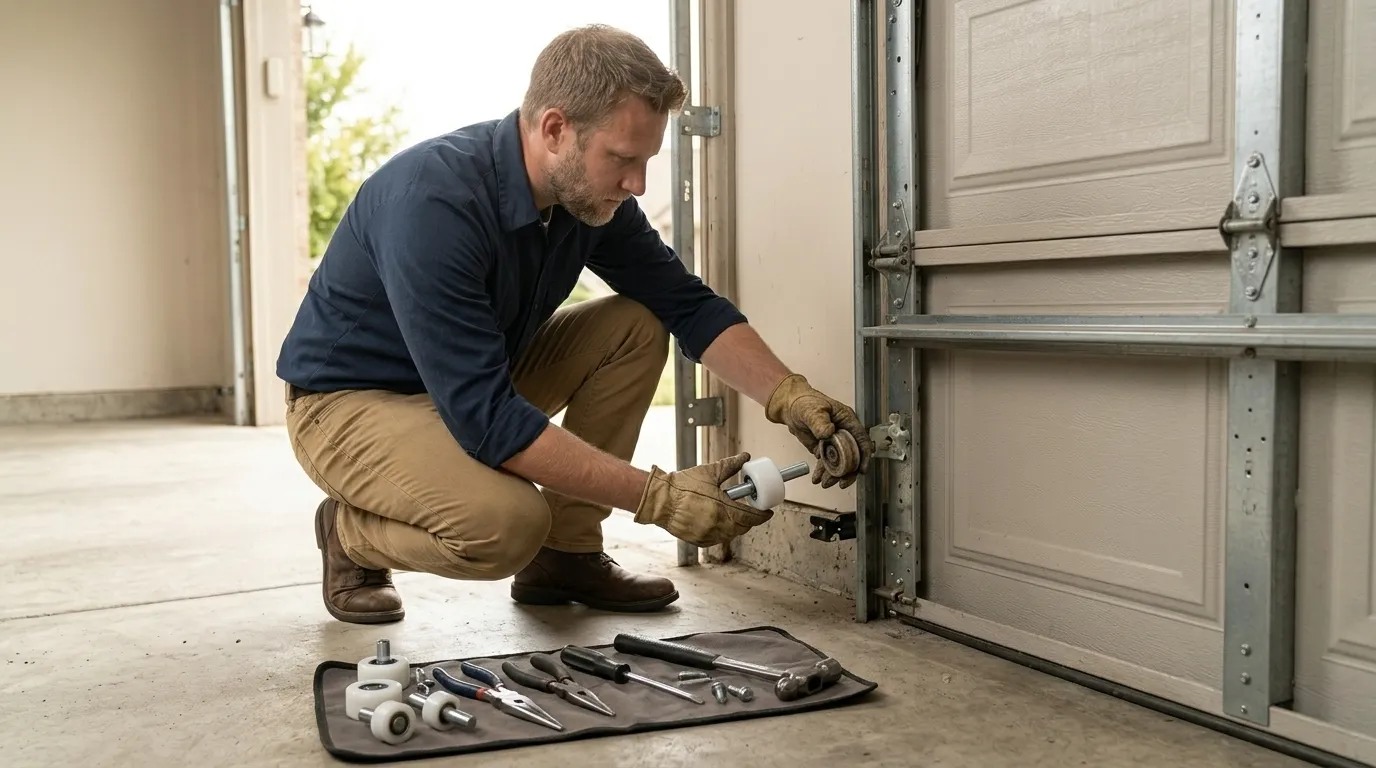
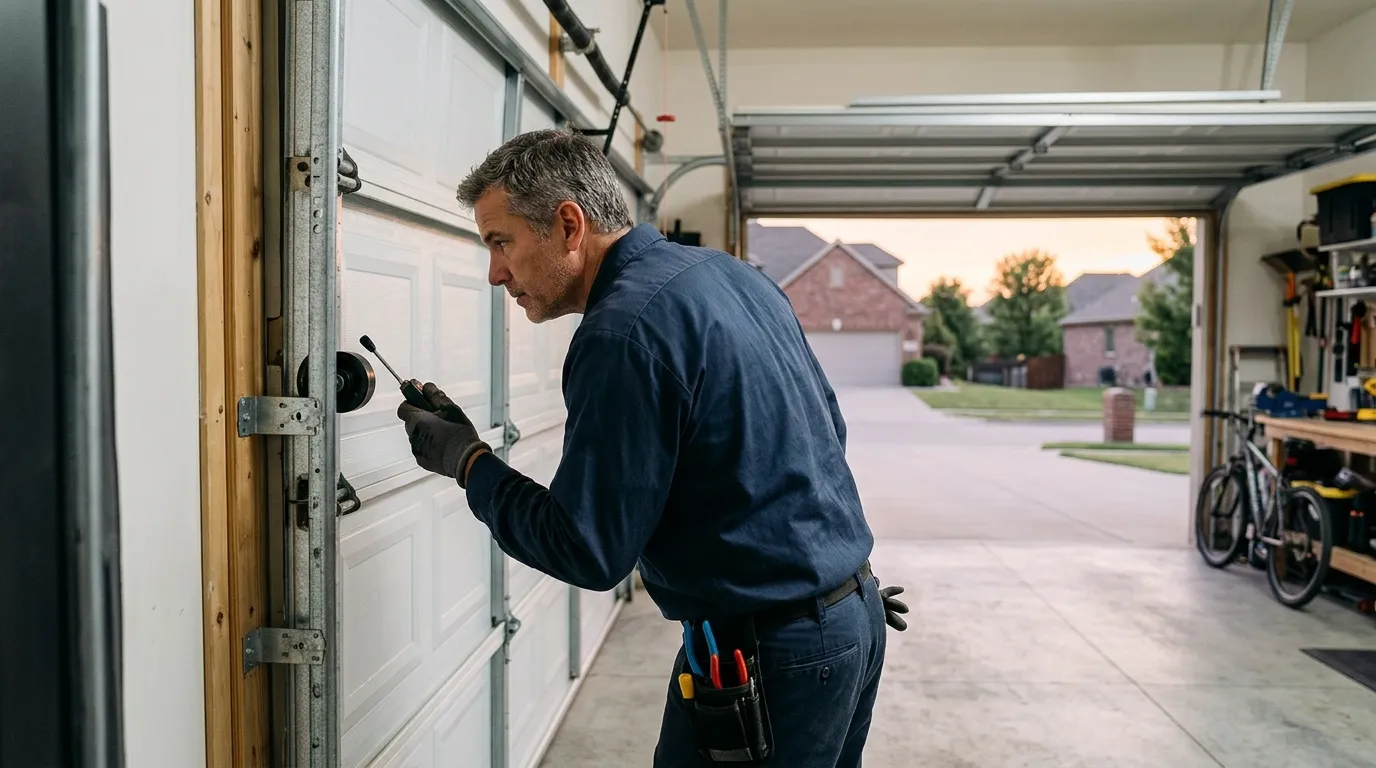
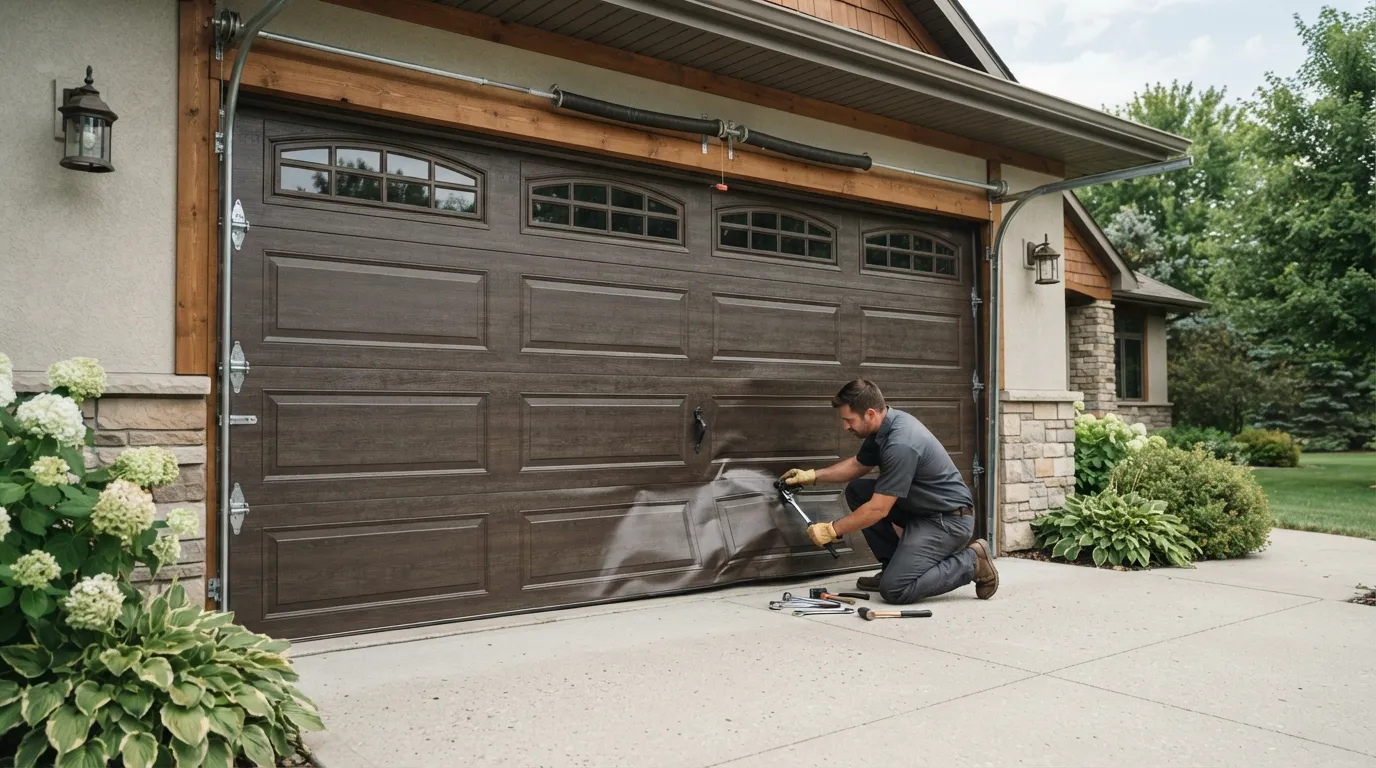
Most houses in this part of Avondale went up around 2002, which puts the garage doors on lighter-gauge steel track and roller hardware than what you'd find on an older build. That track holds up fine under normal use, but it's thinner stock, and thinner stock flexes more when the sun's been on a closed garage all day and the metal heats up and expands. A door that's slightly out of plumb on its track, or a bracket that's worked loose over years of thermal cycling, doesn't need much to jump the rail - a slow roll on a hot afternoon, a bump from a bike or a bin left too close, or one roller finally giving out after enough expansion-and-contraction cycles.
This region sits in a severe-heat climate band, and that heat is the thing older maintenance schedules from cooler parts of the country don't account for. Track brackets that are torqued to spec in October can work loose by July. On a 2002-era door, the failure point is almost always the roller or the bottom bracket, not the panel itself - the panels on stock from this era are usually fine, it's the hardware carrying them that gives out first.